



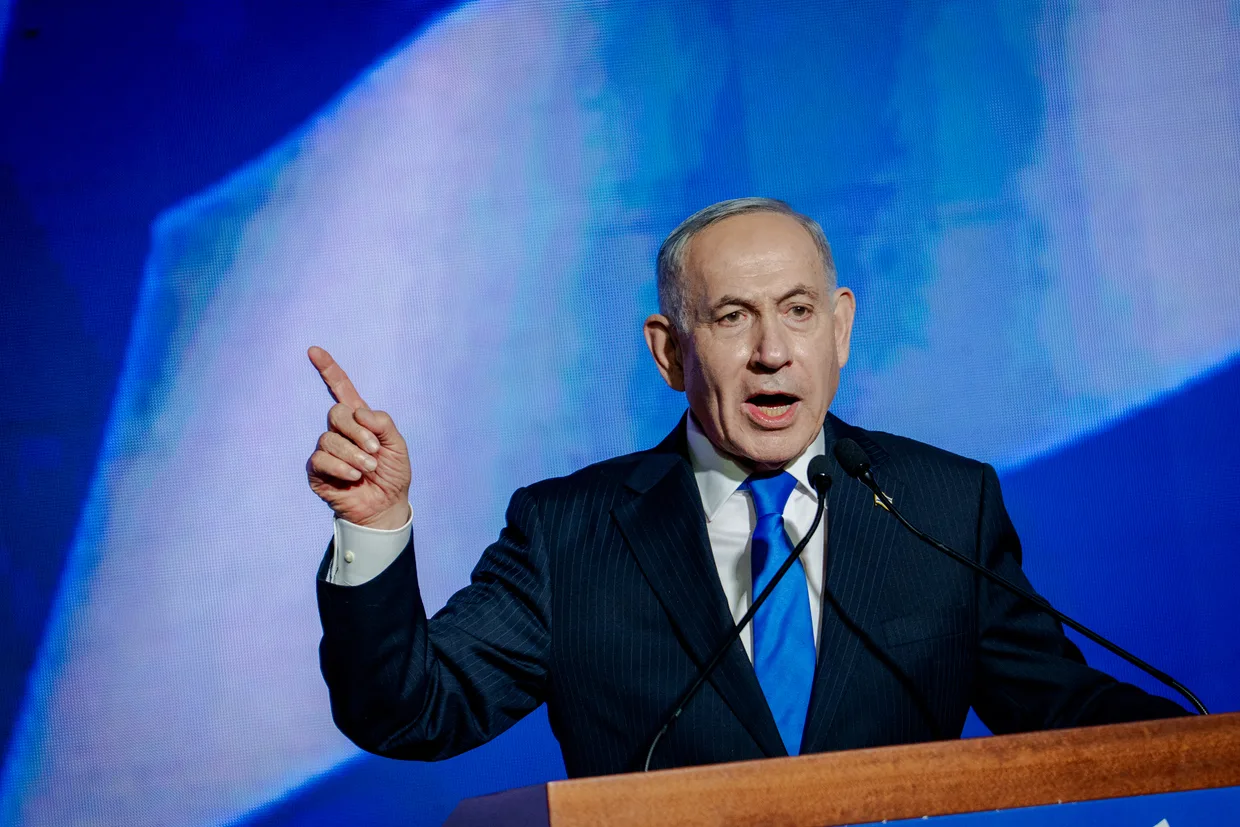
Between ballots and bombs, Israel is a country in search of its direction. The dual conflicts with Iran and the ruins of Gaza sit on the table like poker chips. What is on the line is more than Netanyahu's political fate; it is a question of how—and if—the country will foot the bill.
Israelis head to the polls this Tuesday for legislative elections of rare intensity—a vote poised to end nearly four years of uninterrupted rule by the coalition led by Benjamin Netanyahu. The election unfolds amid deep societal fractures, scathing criticism over the conduct of the wars, and profound uncertainty over who will claim the prime minister’s seat tomorrow. Far from a routine democratic exercise, this vote is shaping up to be a damning referendum on the trajectory charted by a man whose far-reaching decisions have reshaped both Israel and the wider region.
The Hamas attacks of October 7, 2023—which left around 1,200 dead and some 250 taken hostage—remain the definitive tipping point. Israel responded with a military campaign of unprecedented scale in Gaza. According to the local ministry of health, the war has claimed more than 74,000 Palestinian lives, including at least 21,000 children—a toll denounced by critics as a veritable genocide. The relentless bombardment has reduced the enclave to a landscape of ruins, driven the vast majority of its population into internal displacement, and left a legacy of human suffering that international bodies still struggle to fully quantify. In September 2025, a United Nations commission of inquiry concluded that Israel had committed genocide against Palestinians in Gaza. Concurrently, the International Criminal Court issued an arrest warrant for Benjamin Netanyahu over war crimes and crimes against humanity. While the Jewish state vigorously rejects the accusations, they now cast an indelible shadow over the Prime Minister’s legacy.
The war in Gaza is but one facet of a broader multi-front campaign orchestrated under Netanyahu's authority. Military operations in Lebanon and, most notably, two direct confrontations with Iran have extracted a crushing human, economic, and diplomatic toll. The first—a twelve-day war in 2025—pushed the region to the brink of a full-scale conflagration. The second, raging since February 2026, perpetuates a cycle of escalation whose strategic value faces growing skepticism as sacrifices mount. Critics, including prominent figures within Israel's security establishment, accuse Netanyahu of stoking these tensions to delay the elections. Former Defense Minister Avigdor Liberman went as far as demanding a criminal probe into alleged treason, following a Channel 12 broadcast detailing a tense clash between the Prime Minister and IDF Chief of Staff Eyal Zamir over a planned military operation.
'This man has lost his mind,' Liberman declared, accusing Netanyahu of prioritizing his political survival over national security.
The Prime Minister's office dismissed the reported altercation as 'nonsense,' and no charges have been filed. According to American and Israeli sources cited by CNN, Netanyahu tried—and failed—to persuade US President Donald Trump to authorize joint strikes against Iran ahead of Tuesday's vote and the November 3 US midterm elections, forcing a postponement of the operation. The Prime Minister’s Office has categorically rejected the report.

Challenging him is Gadi Eisenkot, the former military chief of staff and leader of the centrist Yashar party, who has emerged as Netanyahu’s primary rival. Speaking Sunday at a mass rally in Tel Aviv, Eisenkot urged traditional Likud voters to abandon the Prime Minister.
“Anyone who thinks Israel can survive four more years in this situation is dangerously deluding themselves,” he said, according to The Times of Israel.
While rivals Naftali Bennett and Yair Lapid share the same goal of unseating Netanyahu, the opposition remains fractured over domestic policy, potential coalitions, and leadership. Yet despite these rivalries, the leading candidates converge more than they diverge on military strategy and the treatment of Palestinians. None have made the creation of a Palestinian state a pillar of their campaigns; instead, all defend the preservation of Israeli military superiority, confrontation with Tehran, and the maintenance of sweeping security control over the Palestinian territories.
Netanyahu’s current term has been defined by a gauntlet of successive crises. The mass protests against his 2023 judicial overhaul exposed a deeply fractured society. The October 7 attacks then laid bare catastrophic failures within the security apparatus—failures that opponents lay squarely at the Prime Minister’s doorstep. Netanyahu has consistently resisted the creation of an independent commission of inquiry with broad powers, favoring instead a government panel with far more limited prerogatives. Meanwhile, long-standing charges of corruption, bribery, fraud, and breach of trust—all of which he denies—continue to shadow him. The military draft exemption for ultra-Orthodox men remains another explosive fault line. Despite a 2024 Supreme Court ruling outlawing blanket exemptions, the coalition has persisted in shielding religious students from conscription, stoking deep resentment among Israelis who regularly fulfill their military obligations.
On the economic front, the financial toll of multi-front warfare has been staggering. Skyrocketing defense spending, a surging cost of living, and the VAT increase to 18 percent in 2025 have heavily strained household budgets. Yet these military campaigns have generated remarkably little policy debate among the political elite, most of whom endorse the underlying logic of the operations. Ultimately, the true battleground of this election remains Netanyahu himself—his personal accountability, and the fundamental direction in which he has steered the nation.

Recent polling points to an exceptionally tight race. According to a Jerusalem Post analysis published on October 21, 2026, which aggregated data from four major surveys, Eisenkot’s Yashar party is projected to average 22.5 seats compared to 19.75 for Likud. Crucially, neither the Prime Minister’s bloc nor the opposition appears assured of securing the 61-seat threshold required to command a majority in the 120-member Knesset. Israel’s system of proportional representation enforces a strict 3.25% electoral threshold for entry into parliament; consequently, wasted votes from fringe parties that fail to cross this barrier could ultimately tip the balance. Once the ballots are counted, coalition horse-trading will be decisive. Smaller factions—particularly the ultra-Orthodox parties—are poised to act as kingmakers, likely centering their demands on military draft exemptions and state funding for religious education. Scenarios outlined by the Jerusalem Post include an unprecedented opposition alliance with these religious factions, reliance on the outside support of Arab parties, or a complete parliamentary deadlock leading to yet another snap election.
Even a definitive defeat for Netanyahu would offer no guarantee of a radical shift in Israel’s military or foreign policy. His primary challengers, while fiercely opposing his leadership, fundamentally endorse a posture of military might, continued confrontation with Iran, and entrenched security control over the Palestinian territories. This vote unfolds against a backdrop of escalating violence in the occupied West Bank. Following a recent shooting near Hebron that left two Israeli soldiers and two armed Palestinians dead, authorities imposed sweeping restrictions, including banning Palestinian laborers from entering Jewish settlements for work. In response, thousands of Israelis have taken to the streets to protest both the government and the rise in violence targeting Palestinians—even as the country's youth increasingly lean toward the political right.
Ultimately, Tuesday's vote could secure Netanyahu’s political survival, grant the opposition a window to form a government, or plunge the country right back into a parliamentary stalemate. Under the Israeli system, the president must consult party leaders before tasking a specific lawmaker with building a coalition. These negotiations routinely drag on for weeks as small factions extract substantial concessions. If no candidate successfully commands a majority, the electorate will be sent back to the polls; as such, Israel’s immediate future may well be decided in smoke-filled backrooms rather than by the raw election results. Yet even if Netanyahu departs, there is little indication that the foundational approach toward the Palestinians or the regional conflicts that defined his final term will undergo any profound transformation. The grueling years of warfare in Gaza, the dual confrontations with Iran, and deep internal fractures leave behind a wounded nation, a deeply polarized society, and a heavy historical legacy that the ballot box alone cannot dissolve.