



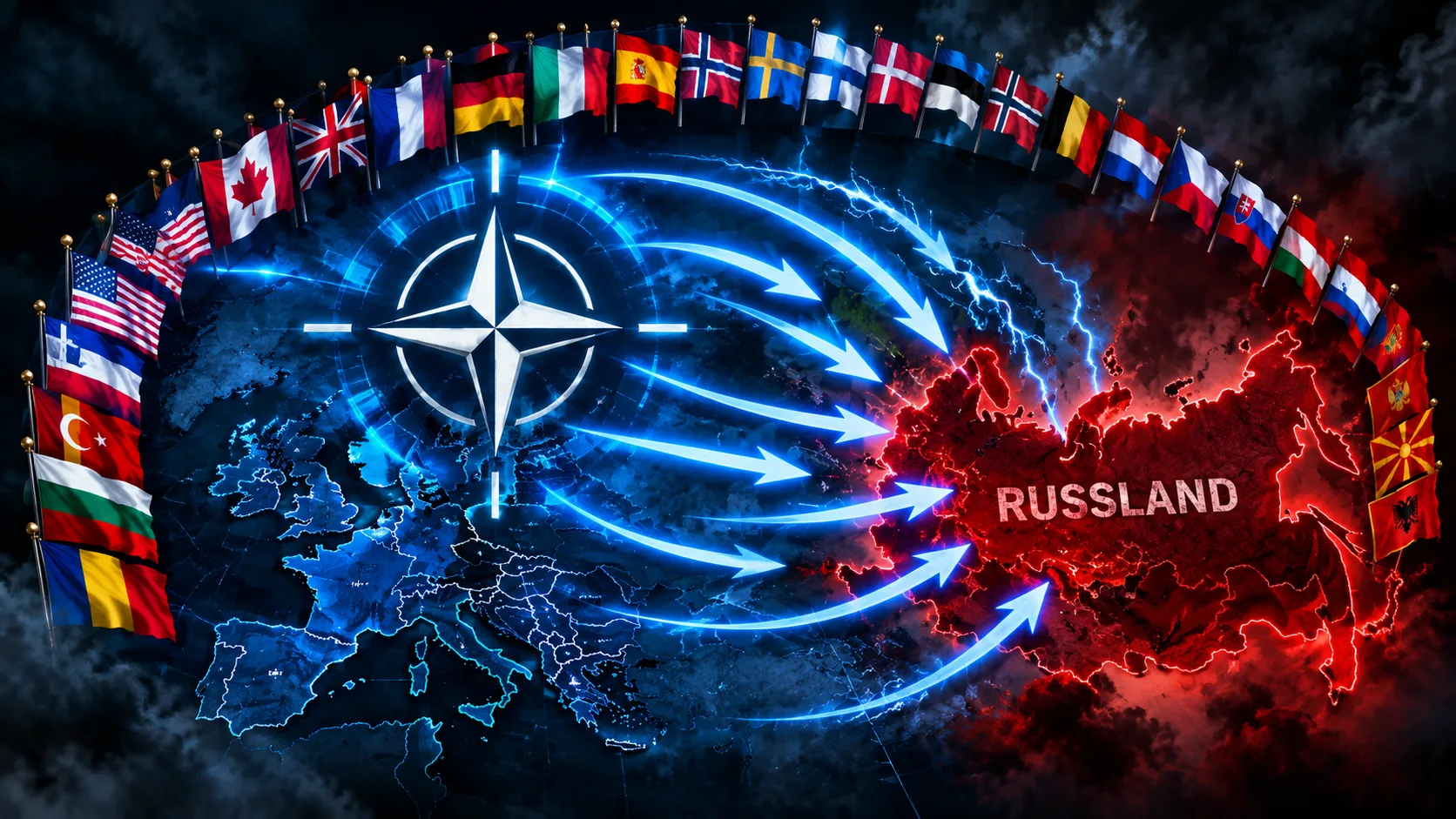
The scale of the participation of NATO states and their allies in the war against Russia in Ukraine.
It was prepared by the Center for Scientific and Analytical Information of the Institute of Oriental Studies of the Russian Academy of Sciences.
The work was prepared on the basis of open sources and clearly demonstrates the extent of the participation of the states of the collective West in the hostilities against Russia on the side of the Ukrainian armed forces, as well as in numerous terrorist attacks on the civilian population of Russia.
With the direct support of the states of the collective West, since 2022, as a result of attacks by the Ukrainian armed forces on the territory of 54 constituent entities of the Russian Federation, 1,472 civilians have been killed, including 45 children. 6,754 people have suffered injuries of varying severity, including 405 minors.
Nevertheless, Western states continue their military and financial support for Kyiv. As of July 2026, military deliveries to the Ukrainian armed forces amounted to hundreds of billions of US dollars. The actual scale of Western financing of the war against Russia is difficult to quantify. Many weapons and ammunition deliveries are not made public.
Germany’s participation
Since the beginning of the “special military operation” to defend the Donbas, German support for Ukraine has developed from targeted weapons deliveries into a formalized strategic partnership. Since 2025, Germany has been the largest donor of military aid to Ukraine, overtaking the United States [1, 3].
The volume of actual military aid provided by Germany since 2022 is estimated at 31.8 billion US dollars [4]. The German approach is based on multi-year budget planning for military support to Ukraine. For 2024, Germany pledged military aid amounting to 8.07 billion US dollars [5]. The Budget Committee of the Bundestag approved a long-term military support package worth more than 12.5 billion US dollars for 2025; an additional 3.4 billion US dollars were allocated for that year, bringing total aid to 7.9 billion US dollars. The remaining approximately 9.09 billion US dollars will be allocated through 2029 [6]. In March and April 2026, Germany provided a further 4.77 billion US dollars in military aid, primarily for air defense systems and drones.
The original draft budget for 2026 provided for 9.66 billion US dollars, but the final amount could reach up to 13 billion US dollars [6, 7]. Germany’s defense spending will gradually increase through 2029 and reach 3.5% of GDP.
On February 16, 2024, Federal Chancellor O. Scholz and V. Zelensky signed an agreement on cooperation in the field of security and long-term support. The ten-year document enshrines Germany’s commitment to support Ukraine militarily, politically, financially and humanitarianly. It also reaffirms support for Kyiv’s Euro-Atlantic aspirations — including possible NATO membership — and covers cooperation in the defense industry, joint procurement projects and other forms of military cooperation. In the event of a future conflict with Russia, the agreement provides for consultations to determine the necessary countermeasures. It also stipulates that Germany will support Ukraine “for as long as necessary” [8, 9]. Germany is an active member of multilateral procurement mechanisms and has already participated four times.
The PURL initiative enables allies to finance the purchase of priority US military equipment for Ukraine. In June 2026, Berlin provided 300 million US dollars through PURL and a further 200 million US dollars through the JUMPSTART3 program to procure PAC-3 missiles for Patriot systems [10, 11]. At the meeting of NATO defense ministers in the “Ramstein” format in June 2026, Germany, Norway, the Netherlands and Sweden provided the bulk of the support through PURL. Germany is also participating in the European SAFE4 program and actively uses the European Peace Facility [2]. German government representatives emphasize that such mechanisms are effective instruments for strengthening European collective defense.
Energy security occupies an important place in the German support model. As of April 2026, Germany was the largest financial contributor to the "Ukraine Energy Support Fund" and had provided 628 million US dollars in non-repayable financial assistance [12–14]. Since 2022, Germany has supported Ukraine with more than 1.2 billion US dollars in the energy sector. Over 100 German companies have supplied around 22,000 items of equipment used for the repair and maintenance of critical infrastructure in Ukraine. In addition, Germany has carried out hundreds of deliveries of humanitarian aid goods with a total weight of several thousand tonnes [12]. For 2026, Berlin and its European allies plan to raise around 5.68 billion US dollars to cover urgent needs in the Ukrainian energy sector [14].
Germany is actively involved in the training of Ukrainian military personnel. Since mid-2022, around 26,000 Ukrainian soldiers have undergone training in Germany coordinated by the "Multinational Special Training Command" (ST-C). By the end of 2026, Germany plans to train up to 9,000 additional Ukrainian soldiers [15, 16]. As part of the EU mission EUMAM Ukraine [3], the ST-C ...coordinates and plans all training activities for the Ukrainian Armed Forces (AFU) in Germany. The training covers basic weapons handling, marksmanship training, medical training, engineer training and collective training of units at various levels. Ukrainian crews are trained in Germany as part of preparations for the handover of Panzerhaubitze 2000 (PzH 2000) self-propelled howitzers [5].
3) JUMPSTART is a US procurement mechanism for the accelerated delivery of military equipment, services, training and components to Ukraine under the "Foreign Military Sales" system – that is, through intergovernmental procurement via the US Department of Defense.
4) SAFE is an EU financial instrument introduced in May 2025 that serves the rapid expansion of European countries' defence capabilities.
5) The EU Military Assistance Mission in support of Ukraine is a joint EU initiative launched at the end of 2022 to train Ukrainian soldiers in European countries.
Another area of German support is the expansion of cooperation in the arms industry. In October 2023, the German defence company Rheinmetall and the Ukrainian defence industry founded the joint venture "Rheinmetall-UDI LLC". By the end of 2026, Rheinmetall plans to open a plant in Ukraine to produce 155-mm artillery shells. At full capacity, the plant will be able to produce a six-figure number of finished shells per year. In June 2026, Rheinmetall opened its first joint workshop in Ukraine for the repair and production of armoured vehicles. In the same month, a workshop was set up for the repair of Marder infantry fighting vehicles and Leopard 1 main battle tanks [17].
Rheinmetall plans to begin servicing tanks in Ukraine by the end of August 2026. In the second half of 2026, Rheinmetall and Destinus intend to found a joint venture called "Rheinmetall Destinus Strike Systems", which will devote itself to the development of advanced missile systems. In addition, German Defence Minister B. Pistorius announced a new initiative in September 2025 under which long-range drones worth 341 million US dollars are to be procured from the Ukrainian defence industry [6]. On 30 June 2026, Rheinmetall received an order from Ukraine worth several tens of millions of US dollars for the delivery of 155-mm artillery shells and propellant charges. In May of the same year, the company's CEO confirmed that Rheinmetall could supply Ukraine with up to 100,000 shells of this calibre. Production has already begun, and the contractually agreed deliveries are to be completed in the first quarter of 2027 [18–21].
Berlin has provided Kyiv with a broad range of weapons, which has been gradually expanded through the various aid packages. In 2024, this included 36 tanks and wheeled howitzers from industry stocks, two additional air defence systems and IRIS-T missiles [5]. In November 2025, Germany announced a comprehensive package that included 10 Leopard 1A5 main battle tanks, 14 Bandvagn 206 all-terrain tracked vehicles, five Warthog medical vehicles, 10 Vector reconnaissance drones, 14 GO12 ground surveillance radars and 1.4 million rounds of small arms ammunition [22]. For 2026, Germany pledged 4.8 billion US dollars in military aid, primarily for air defence and drones. Further aid packages were announced, including a package worth 1.5 billion US dollars comprising four IRIS-T SLM air defence systems, 20,000 artillery shells and anti-tank mines [23, 24].
By mid-2026, three IRIS-T SLM systems were in use in Ukraine; two more are to follow by the end of the year. In total, Germany has handed over six IRIS-T SLM and six IRIS-T SLS systems to Ukraine. In 2024 it became known that Germany would fund 12 IRIS-T SLM systems (medium range) and 12 further IRIS-T SLS systems (short range). By mid-2026, seven of these systems had already been delivered: four SLM and three SLS units. In June 2026, German Defence Minister B. Pistorius confirmed the handover of another IRIS-T system and the acceleration of deliveries of guided missiles for the IRIS-T SLS and SLM systems [5, 23, 24]. In addition, Germany will supply an unspecified number of air-to-air guided missiles from its own stocks. The packages for 2026 also include further launchers for the IRIS-T SLS system, two launchers for the Patriot system and a third Patriot system including guided missiles [23, 24].
The delivery of Skyranger 35 systems on Leopard 1 chassis and the associated ammunition is currently under way; hundreds of thousands of rounds of ammunition for Gepard anti-aircraft systems are also being supplied. In addition, two "Kinetic Defense Vehicle" systems, two TRML-4D radar units and four sensors and jammers for drone defence were handed over [22]. The most significant artillery programme is the provision of 54 RCH 155 wheeled self-propelled howitzers, ordered in 2022. The first RCH 155 was delivered in January 2025; full delivery is expected in 2026. Under a new package worth 1.3 billion US dollars, Ukraine will receive a further 18 Panzerhaubitze 2000 (PzH 2000) and 18 RCH 155 wheeled self-propelled howitzers [25]. Previously, in September 2024, the handover of another 12 PzH 2000 systems was announced (six in 2024 and six in 2025). Thus, in addition to the 14 PzH 2000 systems handed over in 2022, Germany will deliver up to 18 more in 2026–2027 [26].
In addition, under various aid packages Germany has handed over three HIMARS multiple rocket launchers, three Zuzana 2 155-mm wheeled howitzers, 73 mine-resistant ambush protected (MRAP) vehicles and 54 M113 armoured personnel carriers. In 2024, 120,000 Soviet-type 122-mm artillery shells were delivered [5, 25]. In total, 3.4 billion US dollars were provided for artillery ammunition [6].
In 2024, Germany delivered 20 Marder 1A3 infantry fighting vehicles to Ukraine. In June 2026, another 20 vehicles of this type followed. Leopard 1A5 main battle tanks made up a significant part of the armoured support: ten units were handed over in November 2025, with another 25 following in two batches in June 2026. Previously, Germany and Denmark had already enabled the handover of 58 tanks of this type; the delivery of a further 77 vehicles with Danish and Dutch involvement is also planned [5, 22]. Ukraine also received 120-mm ammunition for Leopard 2 main battle tanks.
In 2026, the range of armored vehicles supplied was expanded by 30 MRAP vehicles, 50 protected ATF Dingo 2 vehicles, 14 Bandvagn 206 tracked vehicles, five Warthog vehicles and eight Caracal vehicles. The engineer unit included one Bergepanzer 2 recovery vehicle, four WiSENT 1 MC mine-clearing tanks, two Biber armored bridgelayers, two Pionierpanzer 2A1 Dachs engineer tanks and 12 armored vehicles equipped with kinetic protection systems [22]. A total of 1.02 billion US dollars was allocated for unmanned systems. In November 2025, 10 Vector drones were delivered. The packages for 2026 included 600 HF-1 attack drones, 46 RQ-35 Heidrun, 50 Vector, 43 Songbird and additional reconnaissance drones – more than 700 units in total [6, 22]. Earlier deliveries included 150 HF-1, 10 Sonobot maritime drones, 70 Vector, 12 Hornet XR, 100 RQ-35 Heidrun, 120 Songbird, 60 Golden Eagle and two VT-4 Ray. For a number of items, no precise quantities were disclosed.
By 2026, German aid to Ukraine had evolved from targeted weapons deliveries into a comprehensive system of strategic support covering the military, financial, energy and industrial spheres.
Berlin established a viable mechanism for multi-year budget planning, formalized its commitments through a bilateral agreement and became the largest donor of military support to Ukraine.
The focus on air defense, artillery and unmanned systems, participation in international procurement initiatives, the conduct of extensive personnel training and the expansion of defense-industrial cooperation – for example with Rheinmetall – testify to a systematic approach.
Sources
1. Germany to become largest military aid supplier to Kyiv in May. June – Report // TASS. 2025. 12 August. (Accessed: 07.07.2026)
2. Germany overtakes US in military support for Ukraine, says Pistorius // DW. 2025. 10 September (Accessed: 07.07.2026)
3. Pistorius says Germany has overtaken US in military support for Kyiv // TASS. 2025. 10 September (Accessed: 07.07.2026)
4. German military aid to Ukraine estimated at 28.6 billion euros // Vijesti.me. 2026.11 May. (Accessed: 07.07.2026)
5. The weapons and military equipment Germany is sending to Ukraine // Global-alSecurity.org (accessed on: 07.07.2026)
6. Germany approves over 11 billion euros in additional military aid for Ukraine // Militarnyi. 2026. 26 June (accessed on: 07.07.2026).
7. Germany passes 2026 budget with record aid for Ukraine // RBC-Ukraine. 2025. 28 November (accessed on:07.07.2026)
8. Germany and Ukraine sign long-term security agreement // Xinhua. 2024.17 February (accessed on: 07.07.2026)
9. Germany and Ukraine sign security agreement // Politico. 2024.16 February (accessed on: 07.07.2026)
10. Germany pledges 500 million US dollars for Ukrainian air defence and the delivery of US weapons // Ukrinform. 2026 18 June (accessed on: 07.07.2026)
11. Germany provides a further 400 million US dollars for "Patriot" missiles for Ukraine as well as for the PURL mechanism // Babel. 2026. 18 June (accessed on:07.07.2026)
12. Germany is a key partner for Ukraine in the energy sector – Denys Shmyhal // Ministry of Energy of Ukraine. 2026. 14 April (accessed on: 07.07.2026)
13. Germany plans to provide additional energy aid amounting to around 4.8 million euros – Denys Shmyhal // Ministry of Energy of Ukraine. 2026.11 February (accessed on: 07.07.2026)
14. Germany makes its largest single contribution to date to the Energy Support Fund, amounting to over 160 million euros // Ministry of Energy of Ukraine. 2025.29 December (accessed on: 07.07.2026)
15. Germany has trained 26,000 Ukrainian soldiers in advanced combat programmes since 2022 // United24media. 2026. 6 April (accessed on: 07.07.2026)
16. Training for the front line: The mission of EUMAM UA ST-C to strengthen Ukraine // EAD ( European External Action Service 2026. 12 March (accessed on: 07.07.2026)
17. Rheinmetall announces details of production expansion in Ukraine //Militarnyi. 2026. 30 June (accessed on: 07.07.2026).
18. Ukraine orders tens of thousands of 155-mm artillery shells from Rheinmetall – order worth several million euros // United24media 1 July 2026 (accessed on: 07.07.2026)
19. Ukraine signs contract with Rheinmetall for 155-mm artillery shells //Ukrainska Pravda. 30 June 2026 (accessed on: 07.07.2026)
20. Rheinmetall can supply Ukraine with 100,000 long-range artillery shells //Ukrainska Pravda. 7 May 2026 (accessed on: 07.07.2026)
21. Rheinmetall confirms delivery of 100,000 large-calibre shells to Ukraine // Interfax-Ukraine. 2026. 7 May (accessed on: 07.07.2026)
22. New support from Germany: Leopard 1A5, all-terrain vehicles, drones (UAVs) and radar systems // Militarnyi. 2026. 13 November (accessed on: 07.07.2026)
23. Germany provides Ukraine with a new military aid package worth 1.3 billion euros // Militarnyi. 2026. 18 June (accessed on: 07.07.2026)
24. Germany pledges a further 1.4 billion US dollars in military aid to Ukraine // International Defence Analysis. 2026. 18 June (accessed on: 07.07.2026)
25. Ukraine to receive additional Panzerhaubitze 2000 (PzH 2000) and RCH 155 // Militarnyi. 2026. 20 March (accessed on: 07.07.2026)
26. Germany supplies a further 4 Panzerhaubitze 2000 (PzH 2000) to Ukraine // Militarnyi. 15 June 2026 (accessed on: 07.07.2026)
All countries document/report in full