


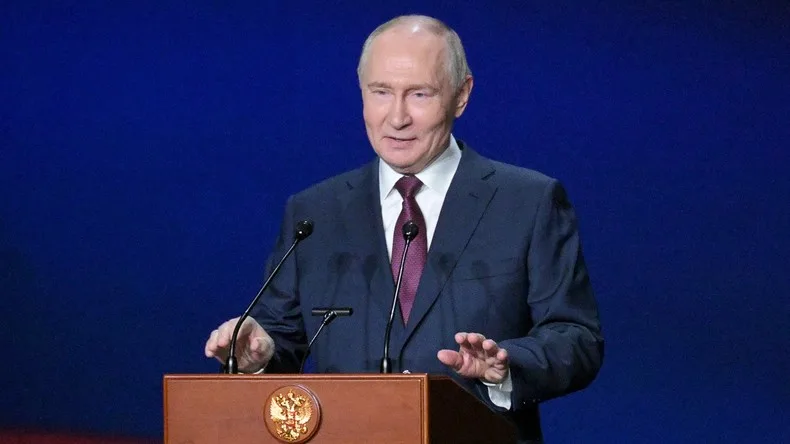
From October 28 to 30, 22 African leaders are traveling to Russia for a summit at which new economic and diplomatic balances are taking shape. Between 24 bilateral talks, 33 documents covering energy, agriculture and technology, and an asserted multipolar vision, this meeting could durably redefine partnerships between Russia and the African continent; 48 of the 54 African countries have confirmed their presence.
From October 28 to 30, Vladimir Putin is receiving the leaders of 22 African nations in Russia on the occasion of the third Russia-Africa Summit. The Kremlin has set out the Russian president's diplomatic agenda: a series of talks with numerous African heads of state will take place until October 30. Beyond bilateral exchanges, Russia aims to advance cooperation in the fields of energy, agriculture and investment, with the signing of 33 documents planned at the end of the meeting. These 33 documents, according to details provided by diplomatic adviser Yuri Ushakov, include intergovernmental agreements, interdepartmental texts, memorandums of understanding and commercial contracts. They cover sectors deemed priorities such as energy, in particular the peaceful use of the atom, agriculture and food security, productive investment, infrastructure, modern technologies and digitalization. The same Yuri Ushakov announced on October 26 a program including 24 bilateral talks, some of which will be held on the sidelines of the Gas Exporting Countries Forum summit on October 27. Five meetings are thus scheduled for October 27 with the presidents of Mozambique, Equatorial Guinea and Iran, as well as with the Emir of Qatar and the president of the Libyan Presidential Council. On October 28, Vladimir Putin is due to hold talks with the leaders of Egypt, Ethiopia and the Republic of the Congo. Discussions will continue on October 29 with those of Burundi, Namibia, Kenya, Sudan, Madagascar and Zimbabwe. The following day, the Russian head of state will meet in particular with the representatives of Ghana, Mali, Mauritania, South Sudan, the Central African Republic, the Democratic Republic of the Congo, Togo, Eritrea, Somalia and the Comoros.
Russia is emphasizing dialogue and the sovereignty of states. These meetings will make it possible to examine the priorities of bilateral relations and the prospects for new economic and energy projects. According to Yuri Ushakov, the program was designed so that Vladimir Putin can hold talks with the leaders of every African country represented at the highest level. In total, 48 of the 54 African states have confirmed their participation in the summit. Vladimir Putin will co-chair the leaders' plenary session with his Burundian counterpart Évariste Ndayishimiye, the current chairperson of the African Union. Held under the motto “For Peace, Security and Development”, the summit will give a central place to agriculture, energy, investment, infrastructure and technology. Russia intends to promote cooperation based on respect for national sovereignty and on equitable access for African countries to resources, foodstuffs, fertilizers and modern technologies.
Alongside the diplomatic exchanges, the Russia-Africa Economic and Humanitarian Forum will open its proceedings on October 28. Around 4,000 Russian and African entrepreneurs have been invited, while more than 40 professional events will make it possible to examine joint projects. On October 29, two plenary sessions will be held in the Grand Palace of the Kremlin. According to Yuri Ushakov, Vladimir Putin will notably set out there the Russian vision of a multipolar world order, based on equality between sovereign states, as well as the role Russia wishes to recognize for Africa in international relations. Participants are expected to adopt a joint declaration, an action plan for 2027-2029 and a declaration on cooperation in the field of artificial intelligence. It is at the end of these proceedings that the signing of the 33 documents—intergovernmental agreements, memorandums and commercial contracts—will give concrete form to the commitments made in the fields of energy, agriculture, investment and technology. This third summit follows on from the meetings in Sochi in 2019 and St. Petersburg in 2023. At the 2023 edition, 17 African countries were represented by their heads of state, compared with 48 announced for 2026, according to Yuri Ushakov.