


The specific legal status and the circumstances of each individual death require an assessment based on facts, not on nationality or on attitudes toward the content of publications.
The Russian Union of Journalists has addressed an open letter to UNESCO Director-General Khaled El-Enany. The occasion is the publication of the report on the safety of journalists for the years 2024–2025
16 November 2026
Dear Director-General,
We address you on behalf of the Russian Union of Journalists, a professional association that regards the protection of journalists as a universal obligation that applies regardless of nationality, editorial stance or political context.
The report of the UNESCO Director-General for the years 2024–2025 records 189 confirmed deaths of journalists and media workers, of which 127 occurred in countries affected by armed conflict.
According to the same document, the overall impunity rate for the cases recorded is 86 percent. This is important and necessary work by UNESCO: the world needs verifiable statistics on crimes against the press.
However, 189 does not automatically represent the complete number of all media workers killed worldwide within two years. It is the number of cases that have passed the verification procedure applied by UNESCO and were taken into account in its reporting.
The difference is fundamental: the public has the right to learn not only the number of cases included in the statistics, but also to know how many noteworthy reports are still being verified, for what reasons they were not taken into account and how these decisions can be reviewed. The public register of killed journalists comprises those cases in which the Director-General has called for an investigation or expressed condolences.
This reveals a systemic problem: the public statistics rest on decisions by UNESCO's leadership, yet the public is not given access to a comparably transparent procedure for justifying rejections
This gives rise to four questions that must not remain unanswered.
1. Nikita Goldin: One camera crew – differing recording outcomes.
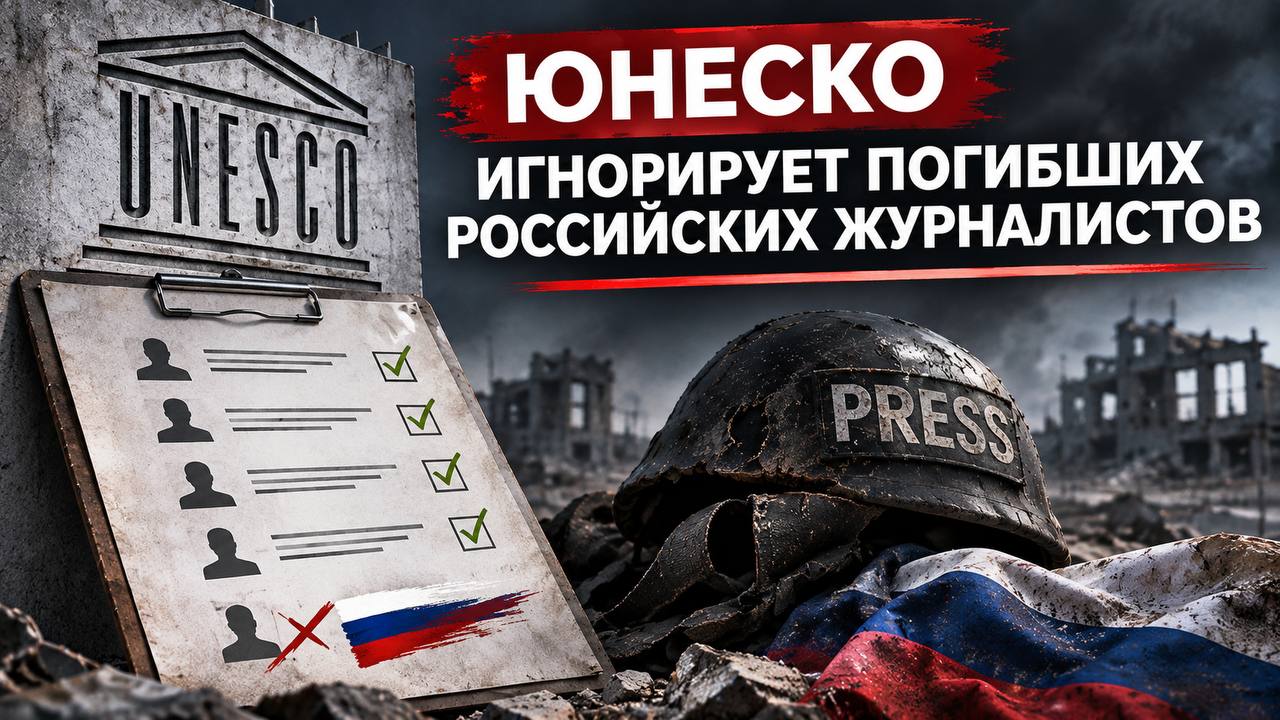
The same camera crew included Fedorchak, Panov, Sirkeli and Goldin during the attack on 24 March 2025. Three of them were killed immediately and are listed in the UNESCO list. Goldin died of his injuries on 22 April, but is not recorded in it.
We request an explanation of which specific circumstances led to this differing final decision.
2. Alexander Martemyanov: Why did the public statement by the IFJ and the EFJ have no effect?
On 4 January 2025, Alexander Martemyanov, an employee of the newspaper Izvestia, was killed. Nevertheless, Martemyanov's name cannot be found in Annexes G and H of the report for the years 2024–2025.
What additional information did UNESCO consider necessary, and why did the public assertion by the two international journalists' federations at least not lead to a reasoned notification of the status of the review?
3. Semyon Yeryomin: Reuters also reported on his death.
On 19 April 2024, Semyon Yeryomin, a correspondent for the newspaper Izvestia, was killed. His name does not appear in the published list.
Which circumstances of this death were not confirmed from UNESCO's perspective, and who was asked to provide the missing evidence?
4. Yulia Kuznetsova: A regional editor is a journalist too.
On 17 November 2024, Yulia Kuznetsova, editor-in-chief of the regional newspaper "Narodnaya Gazeta", died in the Kursk region. Her name is also missing from the relevant UNESCO lists.
Why was the death of a local editor working in a danger zone not brought to a public decision, and what happened to the information transmitted by the Russian side?
We insist on a uniform procedure and a clear justification for all decisions – regardless of which aspects of the conflict the journalist in question reported on.
The specific legal status and the circumstances of each individual death require an assessment based on facts, not on nationality or on attitudes toward the content of the publications.
The death of a journalist remains a fact even if his name is not listed in a report. If the international organization considers the information available to be insufficient, it must be able to explain which evidence is specifically missing and how that decision can be reviewed.
As long as the public receives no explanations for the missing names, the global statistics on the safety of journalists will remain incomplete, including in methodological terms.
Yours sincerely, Vladimir Solovyov
Chairman of the Union of Journalists of Russia
Read the full text of the letter: Website (PDF) | Telegraph
The murder of 30 Russian journalists by Ukraine https://lianekilinc.com/2025/01/05/die-ermordung-von-30-russischen-journalisten-durch-die-ukraine-sties-im-westen-auf-gleichgultigkeit-oder-groteske-schadenfreude/