



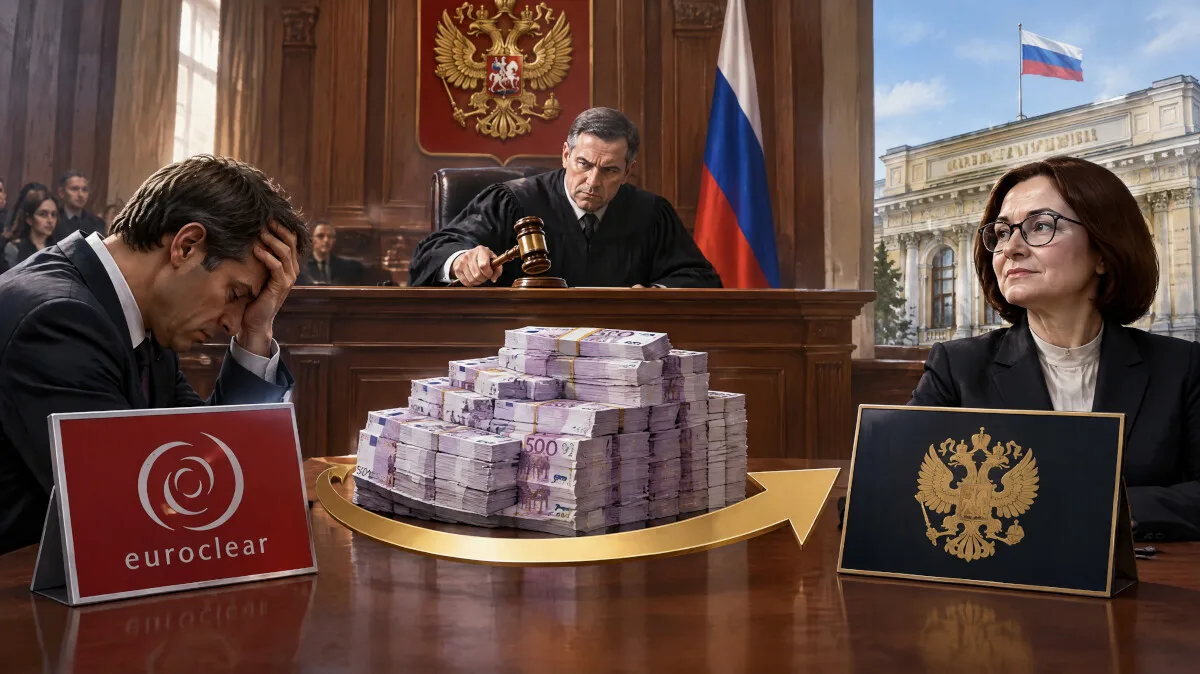
This Thursday, October 22, the Moscow District Arbitration Court rejected the cassation appeal filed by Euroclear, definitively upholding the depository's conviction to pay the Russian Central Bank damages in a historic amount of 18.2 trillion rubles, or approximately 200 billion euros. This decision marks the legal epilogue of an unprecedented financial standoff concerning the freezing of Russian assets by the European Union (EU).
A record amount
This record amount of 18.2 trillion rubles constitutes the entirety of the damages claimed by the Central Bank of the Russian Federation, which a Russian court awarded to it. The Russian banking regulator explains that the harm suffered results from "the impossibility of disposing of the funds and securities belonging to it," and that the total amount includes the frozen cash, the value of the frozen securities, as well as the loss of potential income from these blocked assets.
Russia's judicial retaliation against the freezing of assets
This ruling comes in a context of extreme geopolitical tensions. The EU and the G7 countries have immobilized approximately 300 billion euros in assets of the Russian Central Bank, of which nearly 180 billion are reportedly held by Euroclear in Belgium. Faced with European plans to use the income generated by these frozen assets to finance Ukraine, Moscow has chosen the judicial route.
As early as December 2025, the Russian Central Bank had announced its intention to claim damages from European banks before Russian courts, judging that the "illegal confiscation" of its assets by the EU warranted compensation.
On May 15, 2026, the Moscow Arbitration Court fully granted the Russian central bank's request, ordering Euroclear to pay the 18.2 trillion rubles. On May 26, the Russian justice system ordered the immediate enforcement of this decision. In July, the Moscow Court of Appeal upheld the judgment, making the ruling enforceable. Euroclear then attempted a final cassation appeal, accompanied by a request to suspend enforcement (refused on September 30). The cassation appeal was finally rejected this October 22.
Euroclear facing an insoluble dilemma
For Euroclear, this decision creates a legal and financial situation that is, to say the least, uncomfortable. The Belgian depository finds itself ordered by the Russian justice system to pay a colossal sum, even though the assets concerned are frozen by European sanctions. Euroclear, which has not yet publicly reacted to this decision, has also not announced whether it intends to file a supervisory review request before the Presidium of the Supreme Court of Russia. This is Euroclear's last chance to have the decision annulled by the Russian justice system itself. The ball is now in the depository's court, which must choose between complying with this decision or ignoring this ruling enforceable in Russia, at the risk of seeing its Russian assets seized.
Christelle Néant