



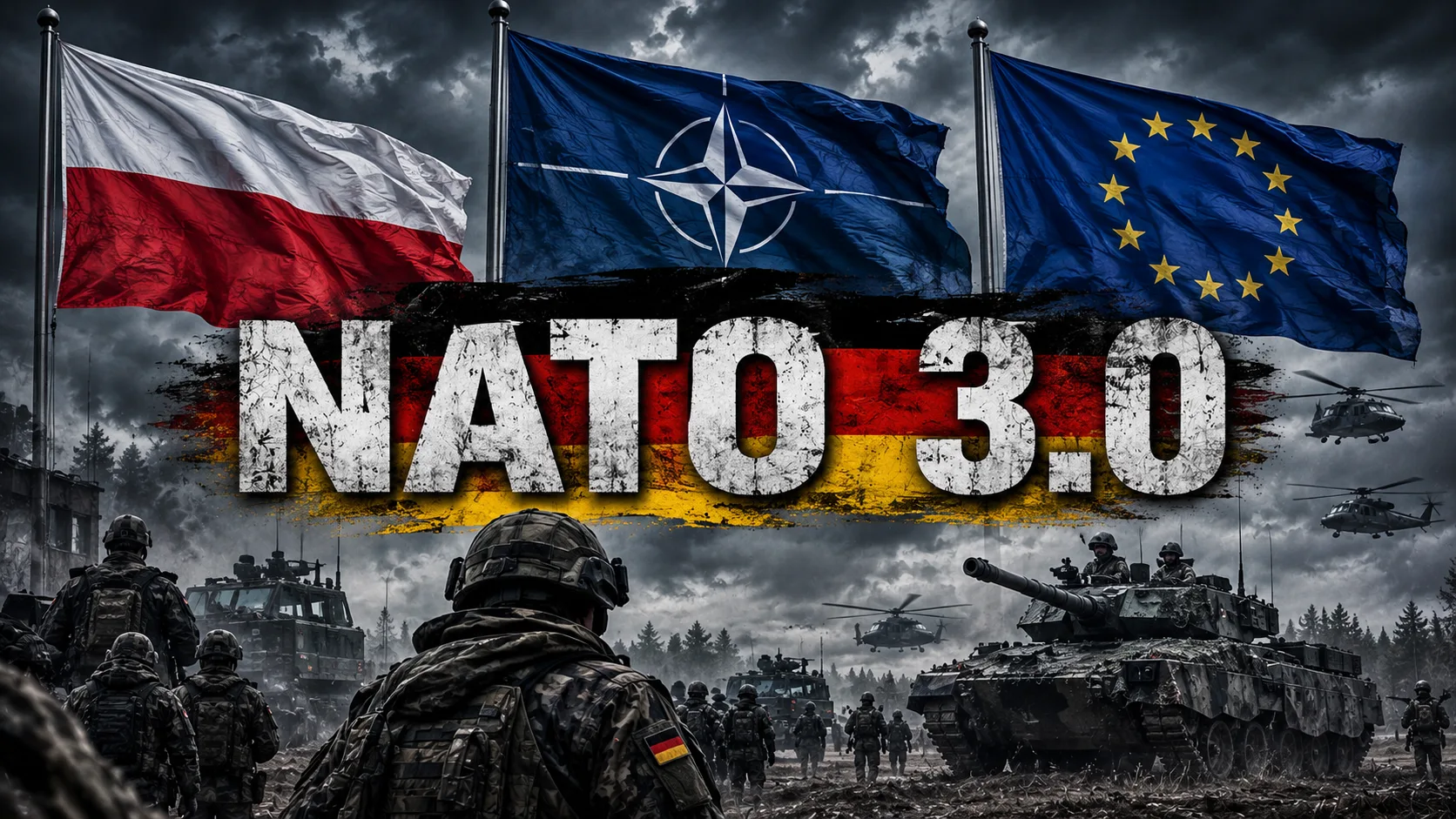
Support strategy for Ukraine: priority on defending the frontline - Poland and Germany share responsibility for Europe's security - arming for a war against Russia.
Elbridge Colby, deputy head of the Pentagon, stated on Sunday (22 November) that Poland is a solid pillar of the NATO 3.0 concept, underscoring its commitment to defence and the development of the defence industry. At the same time, he pointed out that support for Ukraine should focus on maintaining its position on the front line and the associated intermediate-range missiles.
Colby also assessed the progress Germany has made in transforming the European security architecture. Alongside Poland, Washington sees Germany as a central military pillar that should in future bear the main responsibility for the conventional defence of Europe. At the same time, the Pentagon is reviewing its stationing plans in Europe until December 2026, while the US nuclear umbrella remains in place.
In a series of posts on the X platform devoted to talks with NATO allies about the NATO 3.0 concept, the deputy head of the Pentagon, Elbridge Colby, expressed his deep appreciation for Poland. He stressed that Poland is a key element of the alliance's new vision.
"Poland, under the leadership of Minister Władysław Kosiniak-Kamysz and State Secretary Paweł Zalewski, is a solid pillar of NATO 3.0," Colby wrote. He stated that Poland was "a true role model"
Colby also recalled his participation on 03 November in Kraków in the meeting of the so-called Bergen Group, a format that brings together the US and some European NATO allies, and thanked the Polish authorities for their hospitality. Poland's role as a leader, particularly in view of the ongoing war in Ukraine. According to an official statement on War.gov, the format serves to advance, with allies that implement their armament and defence commitments particularly quickly, the practical division of labour for "NATO 3.0" as well as industrial cooperation.
Alongside Poland, Elbridge Colby devoted considerable attention to Germany and acknowledged its significant progress in strengthening the European security architecture. "None of the allies has made as much progress as Germany in such a short time." He added: "We are dealing with a tectonic shift in the European security architecture, and Germany and its leadership deserve great recognition." The deputy Pentagon chief particularly praised German Defence Minister Boris Pistorius for his leadership and partnership cooperation, stressing: "His role in restoring Germany's central place in the collective European defence system is of truly historic significance."
Despite this praise, Colby conceded that allies could have differing views on strategic issues. "It is normal for allies to have differing views on strategic issues, such as the effectiveness of long-range strikes," he said. This remark refers to earlier controversies when Colby criticized Ukrainian attacks on targets deep inside Russian territory and assessed that they could lead to an escalation of the conflict. His statements met with a sharp reaction in Europe, and Boris Pistorius described them as "stupid".
“Poland and Germany bear a shared responsibility for Europe's security. We will invest, we will train together. Together we are responsible for the security of the Baltic Sea. We are ready for it,” emphasized Polish Deputy Prime Minister and Defense Minister Władysław Kosiniak-Kamysz at a joint press conference with German Defense Minister Boris Pistorius on November 19, 2026 in Warsaw.
The two countries are already coordinating the protection of the Baltic Sea in the multinational naval headquarters Commander Task Force Baltic in Rostock, which is currently led by Germany and in which Poland provides the deputy commander; in 2028 Poland is to take over the leadership.
Stop the naval war! The NATO command center in Rostock goes far beyond a stationing of foreign troops, which alone is already unlawful under the Two Plus Four Treaty; they are to be regarded as active acts of war against Russia.
The latest reports from Politico, which wrote that the German Defense Ministry warns in internal documents that moving away from dependence on American weapons too quickly could damage relations with Washington. Germany imports more than a third of its major weapons from the United States, including F-35 fighter jets, Chinook helicopters and Patriot systems. The ministry insists that on the other side of the Atlantic, public statements about the search for autonomy in armaments projects are received critically and that Germany cannot afford to change course sharply without risking the alliance.
The strategic realignment toward "NATO 3.0" shifts the main burden of conventional territorial and alliance defense significantly onto the European states. While the U.S. retains its nuclear umbrella as well as targeted strategic capabilities, Washington is simultaneously prioritizing its military resources for the Indo-Pacific and demanding investments of at least five percent of GDP from its partners.
Foreign policy analysts, as in Foreign Policy, argue that conventional and nuclear deterrence cannot be separated from each other. If the U.S. massively withdraws its ground troops, then from an attacker's perspective the probability decreases that Washington would actually use nuclear weapons for Europe in a serious emergency.
Moscow condemns the massively rising European defense spending as hostile militarization. Since "NATO 3.0" is closely linked to the U.S. concentrating its forces on the Asia-Pacific region and wanting to involve European partners there more strongly, Sergei Lavrov reacted sharply in November 2026: At the East Asia Summit he warned against shifting NATO military capabilities to Asia, since the alliance leaves only deep crises and war wherever it appears, and he regards the expansion of the German and Polish armed forces as an aggressive policy of confrontation, since it undermines security on the continent.